Moving an excavator, generator, or crane across New Providence is not a trucking job — it is a project. Here is how CLX plans a lowboy move so the machine arrives without a surprise permit, bridge, or breakdown.
 CLX Logistics DeskFeb 11, 20264 min read333 views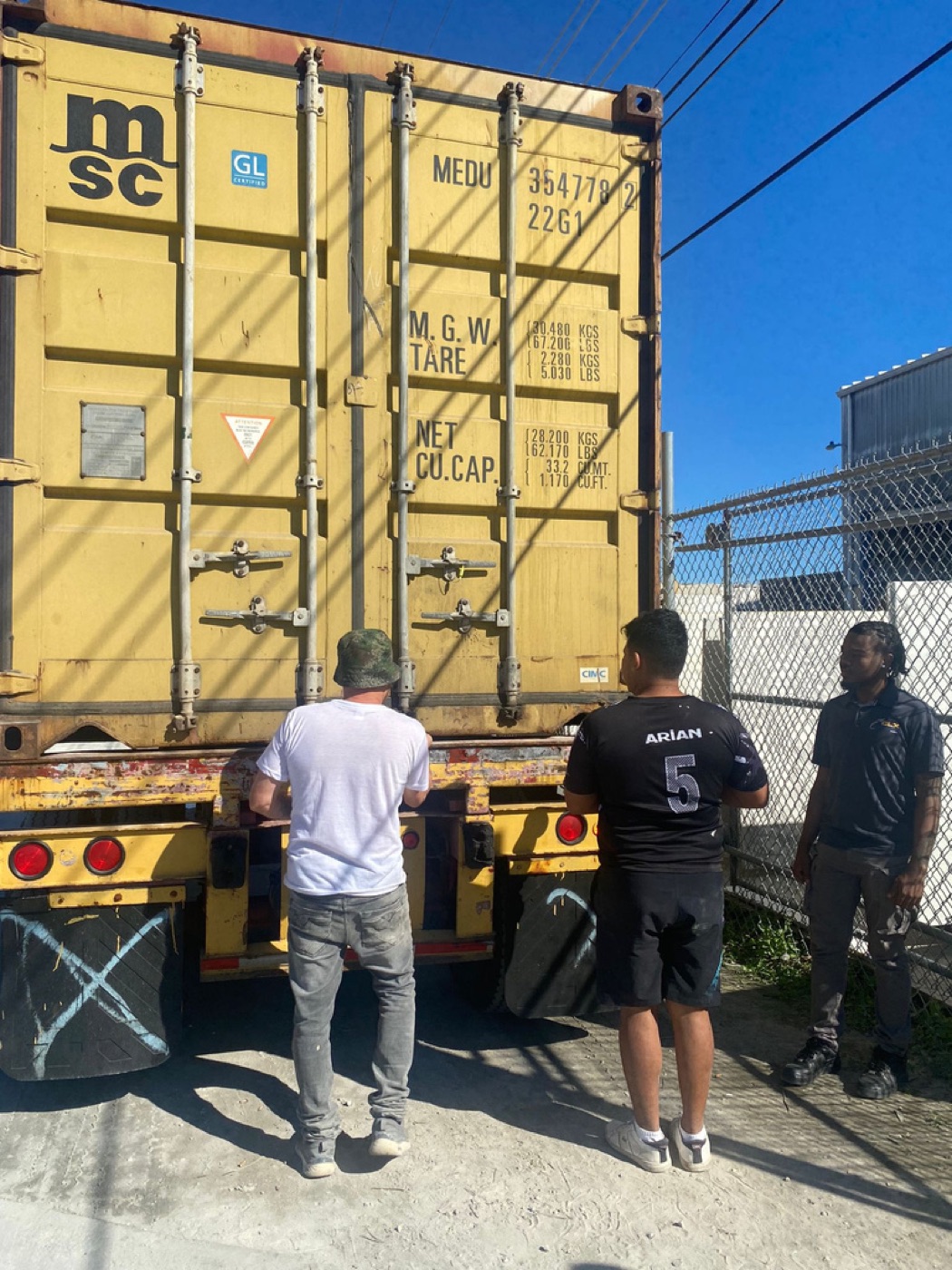
When a customer calls us about landing an excavator, a generator set, a boom lift, or a piece of plant machinery, the first thing we tell them is this: a heavy equipment move on a lowboy is not standard trucking. It is project cargo, and it gets planned like one. The container that machine travels in gets billed on our standard tariff, but the moment it comes off the chassis and onto a lowboy trailer, you are in a different world — one with route surveys, government permits, pilot cars, and a lift plan. We deal with out-of-gauge and heavy-haul work constantly across New Providence and the Family Islands, so we have learned where these jobs go sideways. Almost every problem is avoidable if the planning happens before the machine ships, not after it is sitting on the port apron.
Why a lowboy is a project, not a delivery
Our standard trucking rates cover a container going port-to-consignee on our own chassis. Heavy equipment breaks every assumption behind those rates: the load is over-height or over-width, it cannot be craned in a normal yard, and it usually needs escorts and permits to move on public roads. That is why heavy haul lives in our Project Cargo schedule, quoted bespoke per assignment rather than off the standard tariff. What typically drives the number:
- Project trucking on a lowboy: standard out-of-gauge moves versus heavy-haul moves that require pilot-car coordination
- A route survey — a one-time bridge and clearance assessment along the exact roads your load will travel
- An engineering or lift plan, which is required once a single lift exceeds 30 metric tonnes
- Pilot car and police (RBPF) escort, billed per mile plus standby time
- Government permits from Road Traffic, the Ministry of Works, and RBPF, passed through at cost plus a small coordination fee
The route survey is the step people skip
The single most common mistake is assuming a lowboy can take the same road a container truck takes. It often cannot. Low bridges, tight roundabouts, weight-restricted culverts, overhead lines, and narrow residential approaches near job sites will stop a heavy load cold. A route survey walks the exact path from the port to your site, flags every pinch point, and tells us whether we need a different route, a temporary line lift, or a police escort to hold traffic. It is a one-time cost, and it is cheap insurance against a machine stranded mid-road with a permit clock running. If your lift is genuinely heavy, the lift plan and route survey are not optional add-ons — they are the job.
Permits, brokerage, and the paperwork chain
Heavy equipment carries its own customs and compliance trail on top of the physical move. Vehicle and heavy-equipment brokerage runs $150 per unit and includes VIN verification and Road Traffic coordination — that is separate from the freight and the trucking. Project-specific government permits are billed at $150 per line, flat, across all agencies. If the equipment is coming in for a defined job and going back out, we can set up a temporary import bond rather than paying full duty on a machine that will not stay in the country. Get these decisions made early, because a permit or bond that is not lined up before arrival means the machine waits — and waiting cargo accrues storage and demurrage.
What to send us before you ship
The faster we can quote and schedule, the less your machine sits. Our project quotation process turns a proper spec sheet into a pricing proposal within five business days. To skip the back-and-forth, send us the essentials up front:
- Exact dimensions and total weight of the machine, including any detachable counterweights or attachments
- Lift points and whether it can be driven, rolled, or must be craned on and off
- Origin and final delivery address — the specific site, not just the island
- Whether the site has its own material-handling equipment, or whether we bring the lift capability
- Your timeline, including any concrete pours, crane windows, or Family Island ferry schedules the move has to hit
The pattern is simple: heavy equipment rewards planning and punishes improvisation. Machines that get a route survey, a permit plan, and a lift plan before they ship tend to roll off the lowboy and straight to work. The ones that skip those steps sit at the port waiting on a permit while the job site stands idle. Send us the spec sheet early, and let us build the plan around the machine before it ever leaves origin. Reach documents@clxnow.com or call (242) 605-0452 to start a project quote.