
A practical, cost-by-cost walkthrough of moving your first full container into Nassau — from booking and documentation through customs, chassis, drayage, and final delivery.
 CLX Logistics DeskMar 25, 20264 min read242 views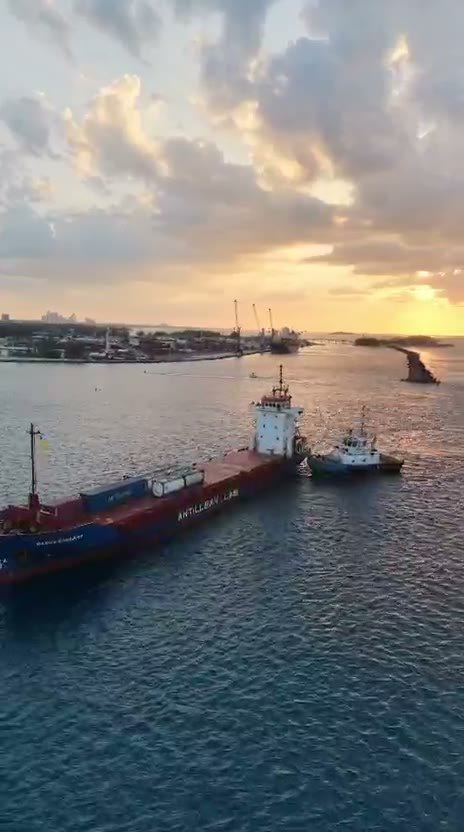
Your first full-container-load (FCL) import feels like a big step up from air freight or the odd pallet. The good news: an ocean container is the cheapest way per cubic foot to move real volume into The Bahamas. The catch is that the freight rate on the booking is only one line on the final bill — documentation, customs, chassis, drayage, and any Family Islands leg all stack on top, and the charges that trip up first-time importers are usually the ones that have nothing to do with the ocean freight itself. Here is how a standard 40ft import into Nassau actually moves through CLX so you can budget the whole job before you commit a dollar to a supplier.
Book early and get your documents right
As the sole Antillean Line agent for The Bahamas, CLX handles a weekly service into Nassau, so your container is landing on a fixed cadence — not on demand. Book against that schedule and confirm your paperwork before the vessel sails. The two documents that matter most are a clean Bill of Lading and a commercial invoice that lists every line item accurately, because your customs entry is built directly off that invoice. Documentation release is mandatory on every shipment ($181.50 per BOL, per container) and is only issued once funds have cleared and the original or telex-released BOL is in hand.
- Match your invoice line items to what is physically in the container — corrections after arrival cost time and money.
- Decide Prepaid vs Collect up front; documentation release applies either way.
- If your origin agent needs coordination for a telex release, flag it early.
- US-origin shipments carry lighter documentation than Europe, China, or UK cargo.
Understand your customs entry — it is priced by origin
Brokerage is tiered by where the cargo originates, because non-US paperwork is more involved. A US-origin entry starts at $75 for the first line item; a non-US-origin entry (Europe, China, UK, other) starts at $125. Each additional line adds $10, so a container packed with many different SKUs costs more to clear than one packed with a few. Sitting on top of brokerage are the real cost drivers on most imports: government duty, VAT, and any environmental levy or Other Government Agency permit — foodstuff, agriculture, BAHFSA, pharmacy, and so on. CLX passes all of those through at cost. Build duty and VAT into your landed-cost math from the start; for many goods they dwarf the freight and handling combined.
Budget the moves after the ship: chassis and drayage
Once the box is discharged it still has to get from the port to your door, and this is where first-timers underestimate. A 40ft chassis rents at $148.50 for the first two days and $100 per day after that, so delay adds up if the container sits. In-house drayage on the CLX fleet is $250 per container within Nassau and $300 for outside-Nassau areas still on New Providence — Western District, Adelaide, Coral Harbour, Lyford Cay. If your site has no loading dock or forklift, the International truck with its piggyback forklift handles the offload for you, priced separately. Empty equipment return is always billed on its own, so don't forget the trip back.
- Clear and collect quickly — chassis days and free-time windows are finite.
- Confirm whether your consignee can offload, or whether you need forklift service.
- One drop is the base drayage rate; each extra stop adds a multi-stop surcharge.
- Standard operating window is 0700–1700 weekdays; after-hours and weekend work carry surcharges.
If it is bound for a Family Island, plan the second leg
Nassau is often not the final stop. Moving cargo between Bahamian islands requires a Transire ($125), and the onward delivery depends on mailboat and ferry schedules rather than a truck you can dispatch on demand. As a DHL Express Family Islands last-mile partner, CLX reaches the islands outside Grand Bahama, but a full container onward from Nassau is quoted per job — it hinges on the mailboat schedule and offload availability at the destination dock. If your buyer is in Eleuthera, Abaco, Exuma, or further out, factor that extra leg and its ferry timing into your delivery promise instead of quoting a Nassau arrival date.
The pattern to take away: freight is one line, landed cost is the whole picture. Before you place a supplier order, ask CLX for a landed-cost estimate that covers documentation, origin-based brokerage, duty and VAT, chassis and drayage, and any Family Islands leg — all in Bahamian dollars, quotation valid 30 days. Get that number first, and your first full container arrives with no surprises on the invoice.